Swimming with whale sharks at Oslob is one of Cebu's most-booked day trips — and one of its most debated. The real logistics from Moalboal, the rules in the water, and the ethical question, answered straight.
Oslob is one of the most-booked day trips out of Moalboal, and also one of the most argued-about activities in Philippine tourism. Both things are worth knowing before you commit a day of your trip to it.
This is the practical version — what the day actually involves, the rules in the water — and the honest version of the debate around it, because we think you deserve both before you book, not just the first one.
What the day actually looks like
Oslob sits on the opposite side of Cebu's southern tip from Moalboal, roughly two to two and a half hours away by road depending on your pickup time and traffic. Because the whale sharks are watched only in the early morning, the day starts well before sunrise — most operators collect guests from Moalboal in the dark so you're in the water not long after dawn.
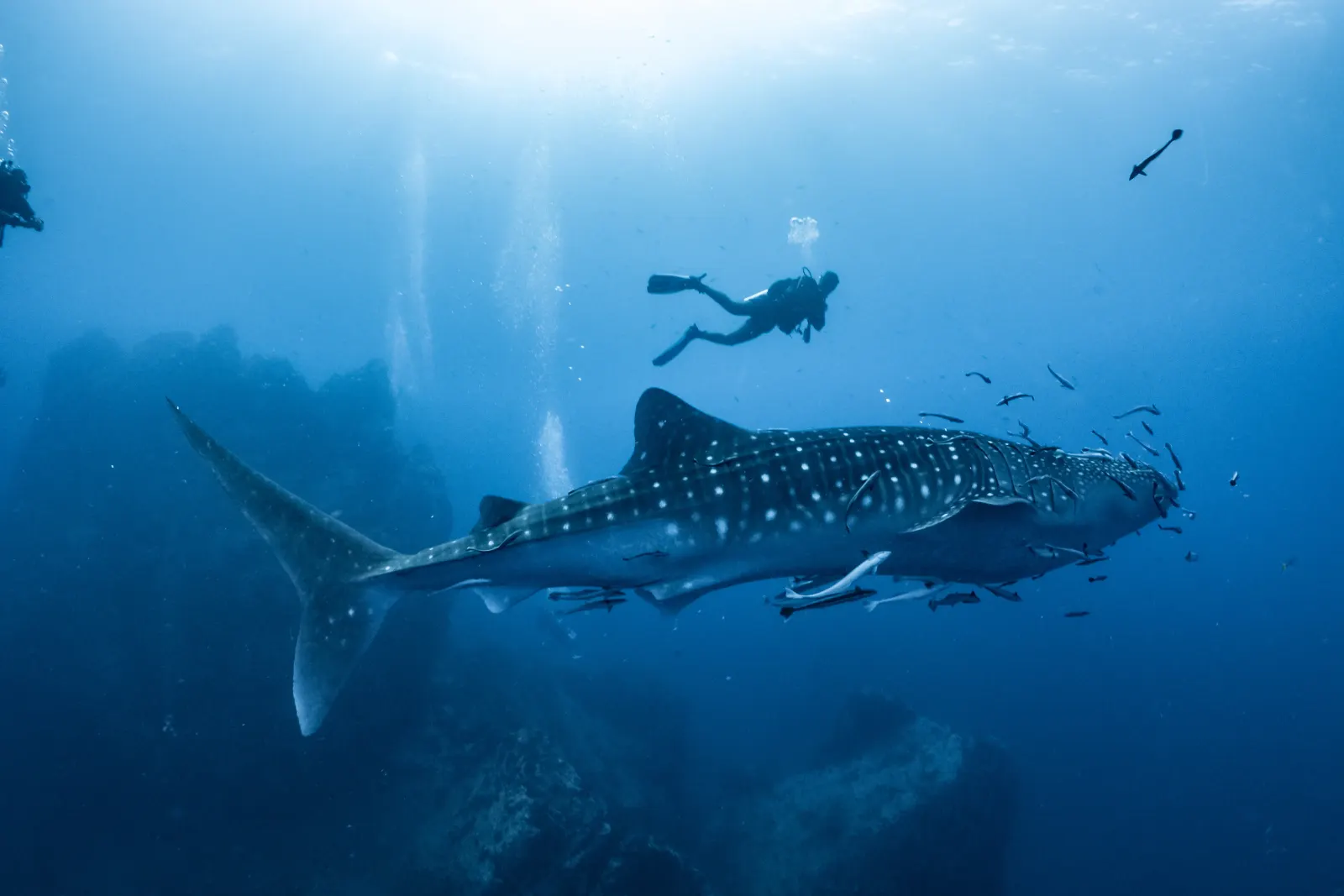
Once there, the interaction itself is brief and tightly managed: small groups go out on outrigger boats into a cordoned swimming area close to shore, watch and swim near the sharks for a set time, then come back in for the next group. It's a snorkel experience, not a dive — scuba diving with the sharks isn't part of how the site operates. By late morning, the watching stops for the day, and the return trip to Moalboal takes up the early afternoon.
The rules, and why they're not optional
Local wardens and boat crews enforce a strict code of conduct in the water:
- No touching the sharks, ever, regardless of how close they pass.
- No flash photography, which can startle or disorient them.
- No sunscreen before entering the water — it rinses into water the sharks feed in.
- A time limit per group, so no single group monopolises the viewing area.
These exist specifically to limit harm to the animals, and they're enforced on the day, not a polite suggestion in a brochure. If you see another visitor breaking one, it's worth saying something — the rules only work if people follow them.
The question most guides skip: is this ethical?
We'd rather answer this directly than leave it out, because it's the first thing a lot of people search before booking, and most of what comes up is either pure marketing or a flat "don't go" with no context.
The sharks gather at Oslob because boatmen hand-feed them a small amount of shrimp every morning. That provisioning is what keeps a population of normally migratory animals reliably present at the same spot, year-round, rather than the mostly open-ocean, unpredictable encounters whale sharks offer almost everywhere else they're seen.
The concern, raised by marine researchers who study whale sharks elsewhere in the Philippines, is about what that habituation does to the animals — altered natural behaviour, increased time spent near boat traffic, and a population that may be more resident and more exposed than it would be otherwise.
The counter-argument, made by the local community and tourism authorities, is that this same arrangement funds a strict, enforced code of conduct and gives fishing communities a direct economic reason to protect the sharks rather than hunt them, which happened in this area historically before whale shark tourism existed. Decades of daily sightings, on this telling, is itself evidence the practice hasn't visibly harmed the population.
We're not going to pretend this is settled, because it isn't. Both positions are held by people who know the subject well, and the honest answer is that it's a genuine trade-off between animal-behaviour concerns and a conservation-through-economics argument, not a simple right-or-wrong.
If the feeding practice bothers you
You have two reasonable options, and either is defensible. Go anyway, informed — plenty of visitors decide the enforced rules and community conservation argument are enough. Or look at the unfed alternatives: Donsol in Sorsogon and Pintuyan in Southern Leyte offer seasonal, unfed encounters based on spotting sharks feeding naturally on plankton. They're less reliable day to day, require more advance planning, and aren't a short trip from Moalboal — but if a natural, unprovisioned encounter matters more to you than certainty, they're worth researching on their own terms.
What we wouldn't do is tell you there's no debate at all. There is, and you should decide where you land on it before you book, not after.
Where Blue Orchid Resort fits
We arrange the Oslob day trip for guests through trusted local operators who run it properly — the early pickup, the transport, and a crew who follow the code of conduct rather than cutting corners on it. It's a long day, so we usually suggest building it around a rest day on either side rather than stacking it against a dive or canyoneering day.
See our activities for the full range of excursions we arrange, or get in touch to add it to your stay.
Frequently asked questions
How far is Oslob from Moalboal, and how long is the trip?
Oslob is on the opposite, southeastern side of Cebu's southern tip, roughly two to two and a half hours away by road, depending on your pickup time and traffic along the coastal route. Because the whale shark watching itself runs only in the early morning, the day starts well before sunrise and usually wraps up by early afternoon.
Do you dive with the whale sharks at Oslob, or just snorkel?
Snorkel only. The interaction takes place in shallow water from outrigger boats within a cordoned swimming area, not as a scuba dive — scuba diving with the whale sharks is not part of how the site operates. You don't need to be a strong swimmer, but you do need to be comfortable in open water with a mask and fins.
What are the rules once you're in the water at Oslob?
No touching the whale sharks, no flash photography, no sunscreen before entering the water, and a time limit per group in the water, enforced by boat crews and local wardens. These rules exist specifically to reduce harm to the animals and are strictly enforced, not a suggestion.
Is swimming with whale sharks at Oslob ethical?
This is genuinely debated, and we'd rather say so than pretend it isn't. The sharks gather because boatmen hand-feed them a small amount of shrimp daily, which is what keeps them reliably present at the same spot year-round rather than migrating as whale sharks naturally do. Marine researchers, including groups that study whale sharks elsewhere in the Philippines, have raised concerns that provisioning like this can alter natural behaviour and increase the sharks' exposure to boat traffic. Local authorities, in turn, point to decades of this practice funding a strict code of conduct and a livelihood that gives the community a direct reason to protect the sharks rather than hunt them, as happened in this area historically. Both things are true at once, and we're not going to pretend the debate is settled.
Are there alternatives if the feeding practice bothers you?
Yes. Whale shark encounters elsewhere in the Philippines — Donsol in Sorsogon and Pintuyan in Southern Leyte are the best known — are seasonal, unfed, and based on spotting sharks feeding naturally on plankton rather than provisioned food. They are less reliable day to day and not a short trip from Moalboal, but if an unfed, natural encounter matters more to you than certainty, they're worth researching separately.
Written by Blue Orchid Resort · Updated November 21, 2026